
Why Journal Bearings Are the Ultimate Choice for Modern Machinery
In heavy industry, every moving part carries weight, both literally and figuratively. Journal bearings are no exception.
Designed to support high-load rotating shafts while keeping friction and wear at bay, journal bearings are essential components behind smooth, dependable operation. Choosing the right material and design isn’t just a technical detail; it’s the difference between peak machine efficiency and unexpected downtime.
At SBS – Singa Bearings Solutions®, we have spent over two decades mastering the science of sliding motion. We don’t just supply journal bearings, we custom-engineer solutions around your specific application because reliable performance starts with truly understanding what your machinery demands.
But, let’s start the beginning. What exactly are journal bearings?
Journal Bearings Explained!
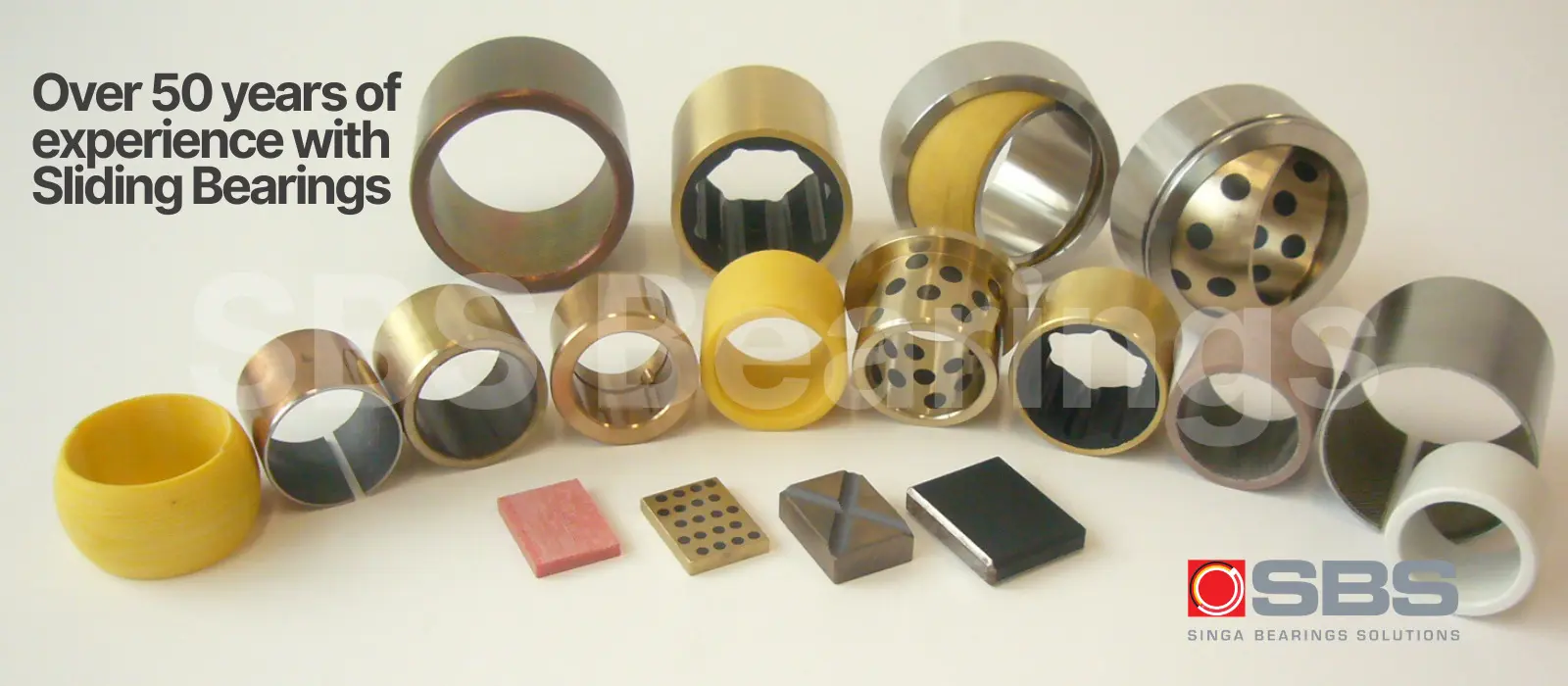
Known interchangeably as plain bearings, sliding bearings, or sleeve bearings, the design of journal bearings typically include a bearing shell that is fitted tightly into its static housing to prevent it from revolving with the shaft. Here is how they work: the rotating shaft (the journal) turns smoothly inside a supporting sleeve, which is pressed into the housing. While they may be one of the oldest bearing designs in engineering history, don’t let their simplicity fool you. They remain an absolute powerhouse in modern industrial applications.
Unlike ball bearings that rely on rolling elements, plain journal bearings rely on direct surface contact buffered by grease or liquid lubrication. Under the right conditions, this sliding design creates an exceptionally low-friction, high-efficiency system built to endure severe loads.
The Key Benefits of Journal Bearings in Industrial Applications
When chosen for the right application, journal bearings bring serious advantages to the table: quieter operation, dampened vibration, and drastically reduced wear. All of which translate directly into a longer lifespan for your equipment. Their simple design and rugged durability make them a cost-effective, highly reliable choice for everything from custom machinery to heavy plant equipment.
However, performance hinges on understanding bearing speed. The physical limits of how fast the shaft can rotate before heat generation, vibration, or centrifugal forces take a toll.
Contact Point: How Journal Bearings Disperse Heavy Loads
Unlike ball or roller bearings that concentrate intense forces onto microscopic points or lines, journal bearings operate through continuous, broad surface area contact. By spreading heavy operational weights across an expansive cylindrical footprint, they eliminate localised stress hotspots that typically lead to surface fatigue and premature shaft failure. When combined with a heavy-duty lubricant or self-lubricating composite material, this full-surface engagement creates an unyielding pressure film, allowing machinery to handle massive static weights and extreme shock loads with remarkable stability and significantly extended service life.
Ball Bearings / Roller Bearings vs. Journal Bearings: Which is right for your machinery?
When specifying components for demanding applications, the debate often comes down to a fundamental choice: journal bearings versus rolling element designs (like ball or rolling element bearings).
Journal bearings are simpler in design compared to ball bearings, which have more complex structures with rolling elements. While ball and rolling element bearings excel at high rotational speeds, their point, or line-contact, design creates severe limitations under heavy force. Subjecting rolling elements to intense shock, heavy vibration, or harsh contamination often leads to localised stress, surface fatigue, and premature failure.
Thanks to continuous surface contact and natural fluid damping, journal bearings handle high-impact loads with ease while significantly reducing noise and vibration, ensuring long-term uptime and rock-solid stability in harsh operating environments. Journal bearings also generate significantly less noise, especially at high speeds, because they lack moving internal components like balls or cages.
Journal Bearing Applications
Where do journal bearings truly excel? Look anywhere heavy work gets done.
From hydraulic cylinders and oscillating excavator booms to mining rigs and marine propulsion systems, these versatile sliding components keep heavy industry moving safely and efficiently. Journal bearings are also commonly used in applications including engines, turbines, and compressors.
Thanks to their broad surface contact area with the bushing, journal bearings are uniquely equipped to absorb heavy shock loads. Instead of transferring sudden impacts directly into the machinery frame, they cushion and disperse the force, protecting critical assets during high-stress operation.
As an added advantage for machine builders and maintenance teams, journal bearings are inherently adaptable and vastly easier to customise in small batches, giving you tailored engineering without astronomical lead times.
Lubrication Methods for Journal Bearings
Effective lubrication isn’t just about keeping parts moving. It’s the cornerstone of journal bearing performance. Optimising your lubrication strategy pays immediate dividends in reduced energy consumption, smoother operation, and minimal downtime.
For heavy-duty, low-speed, or intermittent operations, grease-lubricated journal bearings remain a trusted industry workhorse. Because thick grease cannot flow freely like low-viscosity liquid oil, these bearings rely on engineered grease grooves precision-machined into the inner diameter (ID). This groove architecture actively channels and spreads the lubricant across the entire contact surface, preventing dry spots under load.
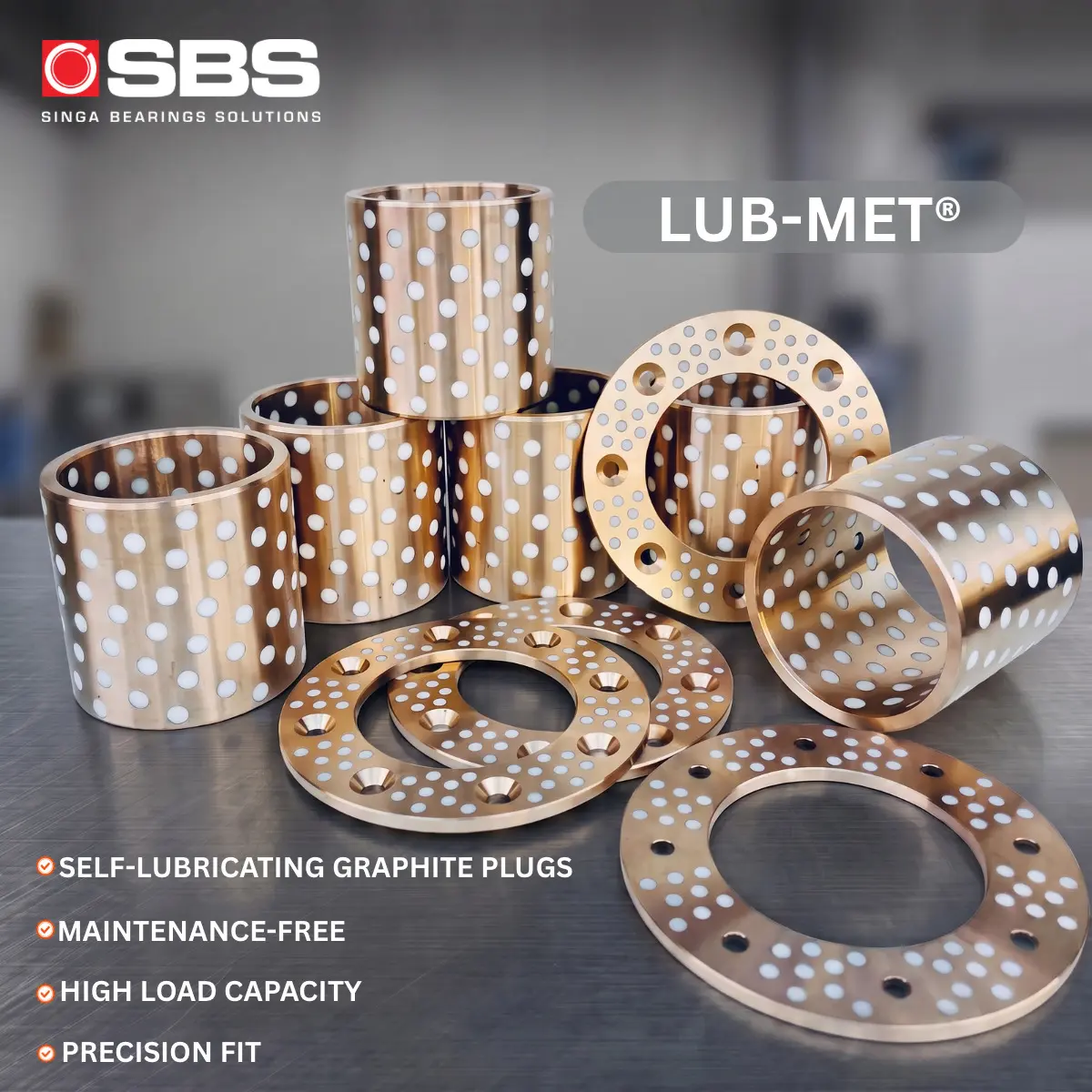
To safeguard critical assets against grease line blockages or pump failures, modern designs often incorporate embedded solid lubricants. These built-in solid lubricant plugs or layers act as a fail-safe backup, ensuring continuous surface protection even when primary lubrication fails.
Maintenance-Free Bearings

Looking ahead, the market is shifting. Over the last decade, particularly in demanding sectors like
marine and offshore engineering, there has been a massive surge in demand for maintenance-free bearing materials that thrive on minimal grease.
In many modern applications, traditional grease maintenance isn’t just impractical. It’s a major liability. Take marine operations, for instance: under Australian Commonwealth and state legislation, discharging even a trace of “oil or oily mixture” into marine waters is a strict liability offence carrying steep fines. Upgrading to maintenance-free composite bushings completely eliminates grease runoff, removing environmental risks and keeping operations fully compliant.
Environment aside, remote or hazardous sites like offshore wind turbines and remote mining rigs present a massive operational hurdle. Manually re-greasing bearings in these locations is outrageously expensive, hazardous for technicians, and often physically impossible.
Self-lubricating plain bearings have a lubricant contained within the bearing walls, which is released during operation. By eliminating the need for external grease altogether, maintenance-free journal bearings smash through these logistical and environmental barriers, delivering zero-maintenance reliability where you need it most.
Read more about going green with maintenance-free solutions here: https://sbs-bearings.com/going-green-maintenance-free
Precision-Engineered Plain & Journal Bearing Solutions by SBS

While types of bearings vary widely, the journal bearing continues to prove its value across industries. The journal bearing’s ability to support shaft rotation with minimal wear and operate efficiently at slow rotational speeds makes it a superior choice in many demanding applications.
SBS offers journal bearing solutions designed to maintain stable operating conditions, minimise wear, and deliver consistent, reliable performance even in the most demanding industrial environments. By combining proven engineering principles with modern analysis, SBS ensures each solution is tailored to meet the specific needs of the application. The reduces downtime and optimises system reliability.
View SBS’s bearing catalogue here: https://sbs-bearings.com/
The SBS Difference

We pride ourselves on being more than just a bearing supplier, acting as a technical partner throughout the entire project lifecycle. From initial concept and design through to production, delivery, and installation, SBS Bearings collaborates closely to ensure every detail is considered and refined. Our team brings both qualitative expertise and quantitative analysis to the table, diving into real performance metrics to inform decisions and validate outcomes.
Read more about our above and beyond service here: https://sbs-bearings.com/above-and-beyond-sbs-bearings
This data-driven approach, combined with hands-on industry experience, allows us to provide practical but innovative journal bearing solutions that deliver real results and long-term value.
Contact SBS for Journal Bearings / Plain Bearings Today!
Want to discover more about the different types of bearings? Or curious and want to learn more about journal bearings? Contact us now at info@sbs-bearings.com.sg !